

Mechanical rock removal.
Ledge Removal & Hoe Ramming.
Break rock mechanically for localized excavation and phased removal.
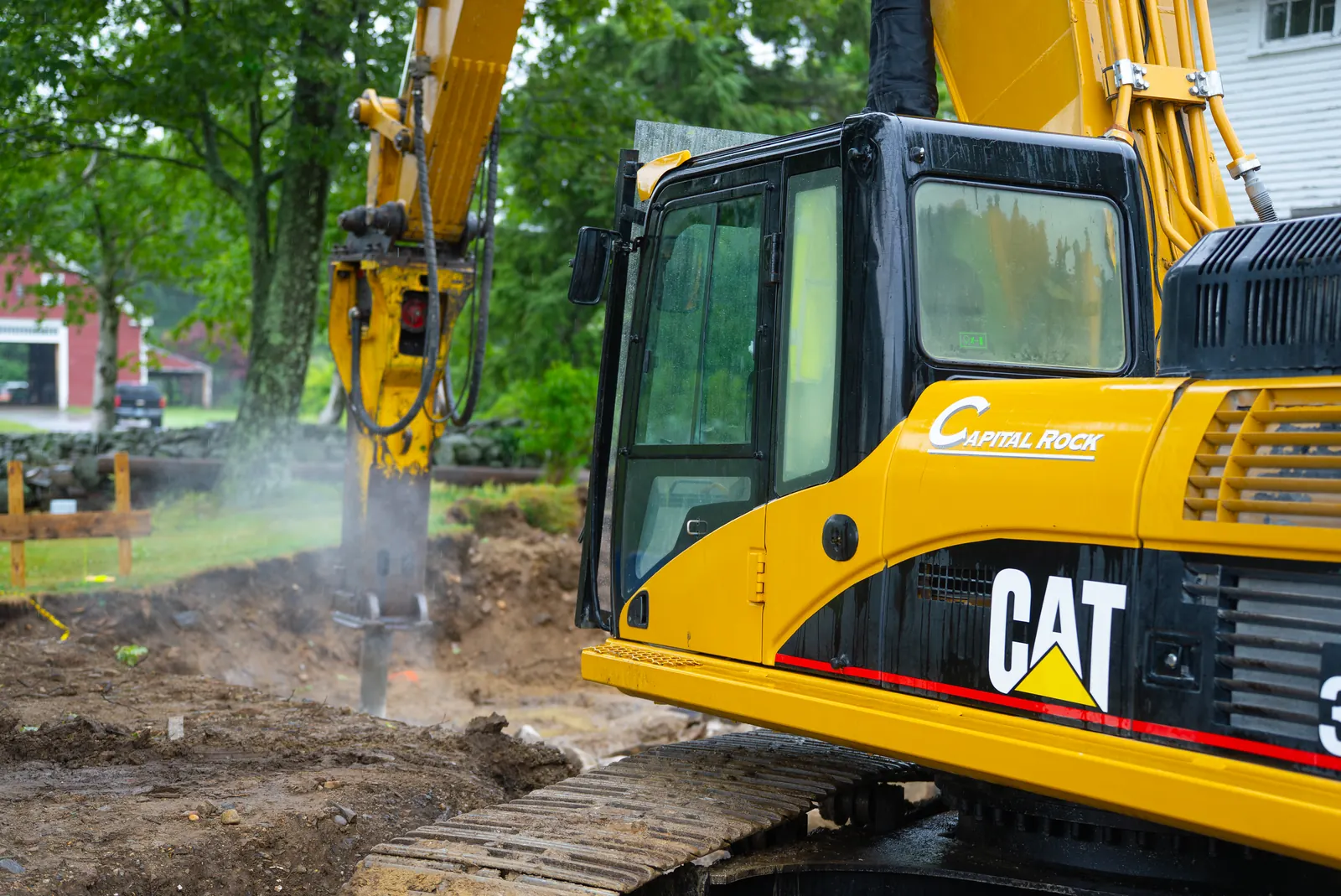
How hoe ramming works
Break the ledge. Keep the excavation moving.
The hydraulic breaker works through the rock in stages so the material can be excavated, sized, staged, or loaded out. The method has to fit both the rock and the space available for the excavator and the work around it.
Compare removal methods
Where hoe ramming fits.
Mechanical removal and controlled blasting can serve different parts of an excavation. Rock conditions, quantity, and access determine what is practical.
Plan for hoe ramming.
A workable machine position, enough room to maneuver, breaking duration, and a route for the material.
Plan for blasting.
Blast design, site protection, monitoring, notifications, and coordination with surrounding work.
Typical applications
Foundations, footings, basements, and additions · Driveways and road grades · Utility trenches · Phased removal, sizing, staging, reuse, or load-out.
Site review
What determines the approach?
These details help Capital Rock evaluate the work. Share what is available and identify what still needs to be confirmed.
Rock and removal limits
Rock condition, quantity, depth, and the required excavation profile influence breaking effort and the suitable method.
Equipment access and reach
The route in, ground conditions, working position, and maneuvering room determine where the breaker can operate.
Material and surrounding work
Nearby utilities and structures, traffic, other trades, schedule, and material movement shape the operation.
Site flow
Breaking the rock is one part of the job.
The machine needs a route in, a workable position, and a plan for the material it breaks.
01 / Access route
How equipment gets in
Confirm the route, ground conditions, clearances, and room to move between working areas.
02 / Working position
Where the breaker works
Allow for machine reach, maneuvering room, nearby assets, and other activity on site.
03 / Material destination
Where the rock goes
Plan breaking, sizing, staging, reuse, or load-out alongside the removal sequence. Confirm who handles each part.
How the work runs
From site review to the next trade.
The sequence connects the service to the excavation and the work that follows.
01
Review the site
Review the rock and removal limits, nearby conditions, equipment access, schedule, and the work that follows.
02
Compare removal methods
Evaluate hoe ramming and controlled blasting against the rock quantity, working room, production needs, and site constraints.
03
Plan the operation
Confirm the machine position, access, sequence, material movement, and responsibilities with the project team.
04
Remove and hand off
Break and handle material in the planned sequence, coordinating staging, reuse, load-out, and the next trade’s access.
Common Questions
Questions before rock removal.
Practical answers about fit, planning, and coordination.
When does hoe ramming suit the work?
It may suit limited quantities, selective or phased work, and sites where the machine can reach the rock. Access, nearby conditions, approvals, and schedule are reviewed alongside the production needs.
Is hoe ramming required beside a house?
No. Proximity is one consideration. The structure, rock, utilities, and quantity help determine whether hoe ramming, a smaller blast, or a combination is appropriate.
How long does the work take?
Duration depends on the rock and site. Hard, deep, or poorly accessed ledge can take longer, as can hauling material instead of reusing it. Capital Rock estimates the work from those conditions.
What happens to the broken rock?
It may be sized for fill, stockpiled, or loaded out. The site conditions and project specifications determine whether the material can be reused and how it will be handled.
Is hoe ramming quieter for neighbors?
It avoids a blast, but it still involves machinery breaking rock. Noise and duration can extend over a longer period than a planned blast. That tradeoff is part of the review.
Are permits still needed?
Mechanical removal may involve fewer blasting-related requirements, but local excavation and erosion requirements can still apply. Capital Rock coordinates the relevant submittals; the owner and general contractor retain responsibility for project permits.
What should I send for a review?
Send the location, photos or plans, approximate rock quantity and depth, equipment access, nearby structures, schedule, and where the material should go.
Ready to review the site?
Show us the rock and the way in.
Share photos or plans, the removal limits, equipment access, and where the broken material needs to go. Capital Rock will review the conditions and recommend the next step.
Requesting a review does not commit the project to a particular removal method.